Cat Treats Australia: The Complete Owner's Guide
Posted by The Huds and Toke Team on 22nd Jul 2026
The short version, in 30 seconds
- Cats are obligate carnivores. They need nutrients that only come from animal tissue, so a meat or seafood treat suits them far better than a grain-based one.
- Smell does most of the work. A cat decides with its nose first. Strong aroma is usually why one treat gets eaten and another gets ignored.
- Ten per cent is the ceiling. Treats should stay a small share of daily intake, with the balanced main diet doing the heavy lifting.
- Fussiness is normal, not defiance. Cats are naturally cautious about new food. Slow introductions work better than persistence.
- Some foods are never safe. Onion, garlic, chocolate, grapes, alcohol and xylitol are all dangerous to cats, and lilies are dangerous in the house at all.
What Are the Best Cat Treats in Australia?
If you ask ten Australian cat owners what the best cat treat is, you will get ten answers, and most of them will be some version of "whatever mine will actually eat". That is a more honest answer than it sounds. A treat that ticks every nutritional box and sits untouched in the bowl has done nothing for your cat.
Still, "whatever they will eat" is not the whole story either. The best cat treats in Australia share a short list of qualities, and once you know them, the shelf gets a lot easier to read.
A genuinely good cat treat is:
- Meat or seafood based. Cats are obligate carnivores. A treat built on animal protein is speaking their language. A treat built on grain, starch and flavouring is not.
- Short on ingredients. The best ones have a single ingredient. Chicken breast. Lamb lung. Fish. That is the whole label.
- Strongly aromatic. Cats lead with their nose. If a treat has no smell, most cats will not bother investigating it.
- Small, or easily broken into small pieces. Cats have small mouths, small stomachs and small daily energy needs.
- Free of artificial colours, flavours and sweeteners. None of these do anything for the cat. They exist to appeal to the human buying the packet.
- Made somewhere you can point to on a map. Australian meat, made in an Australian kitchen, with traceability behind it.
That is the whole checklist. It is short because good cat treats are not complicated. The complication comes from the marketing layered on top of them.
At Huds and Toke we have been making treats on the Sunshine Coast since 2012, in a HACCP-certified kitchen, and our cat treat range is deliberately plain. Australian meat and seafood, air dried, nothing artificial added. We are not going to pretend that is a clever invention. It is just what a cat actually wants, made properly.
The rest of this guide is about the part that is genuinely hard: understanding why your cat behaves the way it does around food, and how to use treats well without accidentally overfeeding a small animal.
Why Cats Are Obligate Carnivores, and What That Means for Treats
This phrase gets used a lot in pet marketing without much explanation, so it is worth slowing down on.
Dogs are opportunistic omnivores. They evolved alongside humans, scavenging our scraps, and their bodies adapted to digest starches reasonably well. A dog can do fine on a diet with a substantial plant component.
Cats did not take that path. The domestic cat descends from a small desert-dwelling hunter, and its metabolism is still built around a diet of whole small prey. Being an obligate carnivore is not a preference. It is a set of hard biological requirements that cats cannot meet from plant material.
What cats must get from animal tissue
Taurine. This is the big one. Taurine is an amino acid that most mammals, including dogs and humans, can manufacture internally from other amino acids. Cats have a very limited ability to do this, and they also lose taurine continuously through their bile. That combination means cats have to eat taurine, every day, for life. It is found almost exclusively in animal tissue, and it is particularly concentrated in muscle meat, heart, and seafood. Long term taurine deficiency in cats is associated with serious heart muscle disease and with degeneration of the retina. This is precisely why you must never feed a cat a diet of dog food, and why "vegetarian cat" is not a thing a responsible owner should attempt without direct veterinary supervision.
Arachidonic acid. A fatty acid that dogs can make from plant-derived precursors. Cats cannot. It comes from animal fat.
Preformed vitamin A. Humans and dogs can convert beta carotene from plants into vitamin A. Cats lack the enzyme to do this efficiently, so they need vitamin A in its ready-made animal form, which is why liver is such a nutrient-dense food for them.
Protein, in a much higher proportion. Cats run a permanently high rate of protein breakdown. They do not downshift it when protein is scarce the way an omnivore does. A cat needs meaningfully more dietary protein per kilo than a dog does, all the time.
What this means when you are standing in front of the treat shelf
It means the ingredient list is not a formality. A cat treat whose first ingredients are wheat flour, corn starch, glycerine and "meat and animal derivatives" is essentially a biscuit with a meaty smell painted on. Your cat can eat it. It just does not do much for them, and it uses up part of a very small daily energy budget.
It also means that a plain piece of dried Australian chicken breast, which looks almost too simple to be a product, is actually doing more nutritional work than an elaborate treat with thirty ingredients. Air drying removes the water and concentrates what is left, which is meat.
None of this means a treat has to be nutritionally complete. It should not be, and it cannot be. Treats sit on top of a complete and balanced daily diet. Their job is to be a small, high-value, species-appropriate extra. Choosing meat and seafood for that extra simply means the extra is working with your cat's biology instead of against it.
Why Cats Are Fussier Than Dogs (and Why That Is Not Stubbornness)
Anyone who has owned both will tell you the same thing. A dog will eat a treat you drop on the floor of a car park. A cat will sniff a premium morsel, look at you, and walk off.
This is not the cat being difficult. There are real, well understood reasons cats are harder to please, and understanding them makes you much better at choosing treats.
Smell comes first, and it comes almost entirely first
Cats have a far more developed sense of smell than we do, and comparatively few taste buds. A cat evaluates food with its nose before its tongue gets a vote. If a treat does not smell like food, the cat has already decided.
Cats also have a vomeronasal organ in the roof of the mouth, which is why you sometimes see a cat pause with its mouth slightly open and a strange grimace after sniffing something. That is called the flehmen response, and it is the cat drawing scent molecules across a second, more sensitive detection system. Your cat is running a chemical analysis on the treat.
The practical takeaway: aroma is the single most important selling point of a cat treat, and aroma is fragile. It fades with air exposure, warmth and time. More on storage later, because it matters enormously.
Cats cannot taste sweetness
Cats lack a functioning sweet taste receptor. Sugar is invisible to them as a flavour. This is a genuinely useful thing to know, because a huge amount of human snack logic simply does not apply. Your cat is not holding out for something sweeter. It is holding out for something that smells more like an animal.
Texture is a first-class concern
Dogs will eat almost any texture. Cats have strong, specific and often lifelong texture preferences. Some cats only ever want soft and slightly yielding. Some want crunchy and brittle. Some want thin and shreddable so they can tear at it. A cat who rejects your treat has often not rejected the flavour at all. They have rejected the mouthfeel.
If a treat is refused, the most useful next experiment is not a different flavour. It is the same flavour in a different texture.
Neophobia and the early imprint window
Cats are naturally neophobic about food, meaning new things are treated as suspect until proven otherwise. In the wild, that is a sensible survival strategy for a small solitary hunter with no one to warn it about bad food.
Kittens form a lot of their food preferences early, largely from what their mother ate and what they encountered in their first months. A cat raised on one narrow texture and flavour will very often stay narrow for life. This is the single strongest argument for gently exposing kittens to a variety of appropriate foods and treats early, while the window is open.
If you have adopted an adult cat with fixed tastes, you have not missed the boat entirely, but you should expect to move slowly and to lose a few rounds.
Confusingly, cats also get bored
Here is the frustrating flip side. Cats are neophobic, and cats also display something researchers call a novelty preference, where a food that has been eaten constantly becomes less appealing purely through familiarity. This is why a cat can adore a treat for four months and then abruptly stop, with nothing else having changed.
It sounds contradictory, and to be honest it is a little contradictory. The practical response is the same either way: rotate. Keep two or three treats your cat accepts, and cycle between them rather than running one into the ground.

Single Ingredient Versus Processed Cat Treats
"Single ingredient" has become a marketing phrase, so it deserves a proper look at what it actually buys you.
A single-ingredient treat is exactly one thing that has been dried, and nothing else. Air dried chicken breast is chicken breast. Air dried lamb lung is lamb lung. There is no binder, no humectant to keep it soft, no flavour enhancer, no colour, no preservative system, no plant protein bulking out the protein figure on the panel.
A processed treat is a formulation. Meat or meat meal is combined with starches, fats, palatants, humectants and preservatives, then extruded or baked into a uniform shape. It is not automatically bad, and there are perfectly reasonable processed treats. But there are trade-offs, and here they are honestly.
| Consideration | Single ingredient, air dried | Formulated or processed treat |
|---|---|---|
| Ingredient transparency | Total. One named animal protein. | Variable. Terms like "meat derivatives" can hide the species. |
| Suitability for elimination diets | Excellent. You know exactly what protein your cat is getting. | Poor. Multiple proteins and unnamed ingredients make it useless for testing. |
| Aroma appeal | High. Drying concentrates the natural smell. | Depends on added palatants, which fade once opened. |
| Consistency of size and shape | Variable. Real muscle and organ tissue is not uniform. | Very consistent. Every piece is identical. |
| Ease of exact portioning | Requires you to break pieces down yourself. | Easy. Count the pieces. |
| Added sugars, colours, artificial flavours | None. | Possible. Read the panel. |
| Moisture content | Low, which is what makes it shelf stable. | Often higher, held there with humectants. |
| Price per gram | Usually higher, because it is all meat. | Usually lower, because starch is cheap. |
The honest summary is this. Single ingredient treats cost more per gram and look less tidy in the bag, because you are paying for meat and meat is not uniform. What you get in exchange is knowing precisely what is going into your cat, which matters a great deal if your cat has a sensitive stomach, suspected food intolerance, or a weight problem you are trying to manage with real numbers.
The variable size is worth calling out honestly. A bag of air dried lamb lung will contain pieces of different sizes, and some will be more brittle than others. That is what real dried offal is like. We would rather tell you that up front than pretend otherwise.
How to Read a Cat Treat Label in Australia
Most people read the front of the packet. Almost all of the useful information is on the back.
The ingredient list
Ingredients are listed in descending order by weight. The first two or three tell you what the product mostly is. If a named meat is not in that top group, the product is not mostly meat.
Watch for these patterns:
- Unnamed protein. "Meat and animal derivatives" or "poultry by-product" does not tell you the species. If your cat has a suspected chicken intolerance, that ingredient is unusable to you.
- Ingredient splitting. A product can list "wheat flour", "wheat gluten" and "wheat starch" separately, so each individually appears lower than the meat, even though the combined wheat content is larger. Add them up mentally.
- Sugars and syrups. Cats cannot taste sweetness, so sugar in a cat treat is doing a job for the manufacturer, usually texture or shelf life, not for the cat.
- Humectants. Glycerine and propylene glycol keep semi-moist treats chewy. Propylene glycol in particular is one that many owners choose to avoid in cat products, and it is worth a conversation with your Australian vet if you see it and are unsure.
- Artificial colours. Cats do not care what colour a treat is. Colour is for you.
The guaranteed or typical analysis
This panel gives you protein, fat, fibre, moisture and sometimes ash, usually as percentages. There is a trap here that catches a lot of people.
Those percentages are "as fed", meaning they include the water in the product. A soft treat with 30 percent moisture and a dry treat with 8 percent moisture cannot be compared directly. The dry one will always look higher in protein, partly just because there is less water diluting it.
If you want a fair comparison, work out the dry matter figure. Subtract the moisture percentage from 100 to get the dry matter, then divide the protein percentage by that dry matter figure and multiply by 100. Do it for both products and you are comparing like with like.
Feeding guidance and energy content
Look for a kilojoule or calorie figure, ideally per piece or per 100 grams. Without it you cannot honestly manage portions. If a product does not state it, you are guessing, and with an animal that may only need a very modest amount of food a day, guessing adds up quickly.
Complete and balanced versus complementary
Treats are complementary food. They are not designed to be nutritionally complete, and a good treat brand will say so rather than implying the treat could replace a meal. Your cat's complete nutrition should come from its main diet. Have a look at our cat food section for the everyday side of that equation, and talk to your Australian vet about what suits your particular cat.
Country of origin
Australian made and Australian ingredients are two different claims. A product can be made in Australia from imported ingredients. If provenance matters to you, look for both statements, and look for a brand willing to tell you where the meat came from.
How to Choose a Cat Treat Your Cat Will Actually Eat
Now to the practical matching problem. Here is how the main treat formats break down, and which sort of cat tends to go for each.
| Treat format | Texture | Aroma strength | Best suited to | Watch out for |
|---|---|---|---|---|
| Air dried fish pieces | Light, crisp, snaps easily | Very strong | Fussy cats, first-time treat introductions, cats who ignore everything else | The smell is strong for humans too. Store it sealed. |
| Air dried chicken breast | Firm, slightly fibrous, tears into strips | Moderate | Cats who like to work at food, training sessions, tearing and shredding play | Needs breaking down for small or senior cats |
| Air dried lung (puffed offal) | Very light, airy, almost dissolves | Moderate to strong | Senior cats, cats with poor dentition, cats who dislike hard textures | Crumbles easily, so expect some dust in the bag |
| Dried shellfish and mussel | Firm and slightly chewy | Strong and distinctive | Cats who love novelty, owners wanting a seafood variety in rotation | Distinctive smell, and not every cat takes to shellfish |
| Whole small dried fish | Crunchy, whole-prey style | Very strong | Enrichment, food puzzles, cats who like a whole item to carry around | Size varies. Break for small cats. |
| Semi-moist formulated treats | Soft, uniform, springy | Depends on added palatants | Cats who will only accept soft food, easy pill wrapping | Often contains humectants, starches and sugars. Read the label. |
| Crunchy baked kibble-style treats | Hard, uniform | Mild | Convenience and consistent portioning | Usually starch heavy. Aroma fades fast once opened. |
| Lickable paste or puree | Wet, smooth | Strong | Bonding, medication, cats who are unwell or off their food | Very easy to overfeed because it feels like "not much" |
Match the size to the cat, not to the packet
A cat's stomach is roughly the size of a ping pong ball. Whatever the packet suggests as a piece, most cats do better with something smaller. Breaking a treat into three pieces gives you three rewards instead of one, which is better for training and better for the waistline.
For kittens, senior cats and cats with dental problems, break treats down further and consider crumbling them over food rather than offering them whole.
Work out your cat's "high value" item
Every cat has one thing they will cross a room for. Find it, and then protect it. Do not use your highest value treat as an everyday freebie. Save it for the things that are genuinely hard: nail trims, carrier training, meeting a new person, taking medication.
An ordinary treat given constantly loses its power. A special treat given rarely keeps it.
Consider your own tolerance
This is rarely mentioned and genuinely matters. Some of the most effective cat treats are dried fish and dried offal, and they smell like dried fish and dried offal. If you cannot stand having it in the house, you will stop using it, and a treat you stop using is not helping anyone. Pick something you can live with, store it well, and wash your hands.
How Many Treats Can a Cat Have? Portioning and Moderation
This is where most well-meaning owners go wrong, and it is worth being blunt about it.
Cats are small. An average adult domestic cat weighs somewhere around four to five kilos. Their total daily energy requirement is modest, and a desexed indoor cat's requirement is lower again. A few treats that feel trivial to you can represent a meaningful share of that day's intake.
Australian vets generally advise that treats should make up no more than about ten percent of a cat's daily energy intake, with the remaining ninety percent coming from a complete and balanced diet. That guideline exists for two reasons. It keeps calories under control, and it stops treats from unbalancing the nutritional profile of the overall diet.
Ten percent of a small number is a very small number.
A practical starting guide
The table below is a general starting point, not a prescription. Actual amounts depend on the specific treat's energy density, your cat's body condition, activity level, life stage and health. Your Australian vet can give you a proper daily energy figure for your individual cat, and that is worth asking for at the next check-up.
| Cat weight | Typical life stage or type | Suggested daily treat allowance (small pieces) | Notes |
|---|---|---|---|
| 2 kg | Kitten or very small adult | 2 to 3 small pieces | Break pieces smaller again. Kittens need their complete diet most of all. |
| 3 kg | Small adult, active | 3 to 4 small pieces | Spread across the day rather than all at once. |
| 4 kg | Average adult, desexed indoor | 4 to 5 small pieces | Reduce the main meal slightly on high-treat days. |
| 5 kg | Larger adult or large breed | 5 to 6 small pieces | Confirm this is lean weight, not extra weight. |
| 6 kg and over | Large breed, or overweight cat | Do not scale up automatically | If the cat is overweight, portion for the target weight, not the current weight. Ask your vet. |
| Any weight, on a vet weight plan | Weight loss programme | As directed by your vet | Often the answer is to take treats out of the main meal allocation entirely. |
A "small piece" here means something roughly the size of your smallest fingernail, not a whole strip of dried chicken breast.
Three habits that keep portions honest
Decant the day's treats in the morning. Put the day's allowance into a small container or an egg cup. When it is empty, treats are done. This is by far the most effective trick we know, because it removes the running mental tally that everyone loses track of.
Count everyone who feeds the cat. In a household of three, a cat can receive three separate "just one" treats from three separate people who each think they are the only one. Multi-person households are where cat weight gain quietly happens. Agree on the daily allowance out loud.
Subtract, do not add. On a day with lots of training or a vet visit, take a little out of the main meal. Treats should displace some of the daily food, not sit on top of it.
A note on the ten percent rule and single ingredient treats
There is a reasonable argument that a plain dried meat treat is a gentler thing to give than a starchy formulated one, because at least it is contributing quality animal protein rather than filler. That is true as far as it goes.
It does not make the calories disappear. Air dried meat is dehydrated, so gram for gram it is quite energy dense. A ten gram piece of dried chicken breast represents considerably more than ten grams of fresh chicken. Treat air dried products with respect on portioning precisely because they are concentrated.
Treats and Weight Management in Desexed Indoor Cats
Excess weight is one of the most common health issues Australian vets see in cats, and the typical profile is very consistent: desexed, indoors, adult, and eating just slightly more than needed for a very long time.
Desexing changes a cat's metabolism. Energy requirements drop noticeably after the procedure, and appetite often does not drop with them. If food quantities stay the same, weight creeps up. It happens slowly enough that nobody notices month to month, which is exactly the problem.
Indoor living compounds it. An indoor cat may spend a large part of the day asleep, with a food bowl a short walk away and nothing to hunt.
Where treats fit in
Treats are not the villain here, but they are frequently the tipping point. A cat eating an appropriate main diet plus an unmeasured handful of treats each day is a cat gaining weight.
The good news is that treats are also one of your best tools, if you use them deliberately.
- Make the cat work for them. A treat scattered across a room, hidden in a puzzle, or thrown for the cat to chase costs the same calories but buys you movement. See the enrichment section below.
- Use very small pieces. Cats respond to the event of getting a treat far more than the size of it. Three tiny pieces given at three moments beat one large piece given once.
- Choose lean proteins. Air dried white fish and chicken breast are lean. Fattier cuts and skin-on products are more energy dense.
- Replace some treats with attention. Cats will work for a scratch under the chin, a burst of wand toy play, or ten seconds of your undivided focus. Not always, and not for every cat, but more often than owners assume.
How to tell if your cat is carrying extra weight
Weight alone tells you less than body condition. Run your hands along your cat's side. You should be able to feel the ribs easily under a thin layer of covering, without pressing hard. Looking down from above, there should be a visible waist behind the ribs. From the side, the belly should tuck up rather than hang.
If you cannot feel ribs without pressing, or there is no waist, have a conversation with your Australian vet. Weight loss in cats needs to be done slowly and under supervision, because cats who lose weight too quickly can develop serious liver problems. Never crash diet a cat. This is genuinely a case where doing it wrong is more dangerous than doing nothing.
Our Cat Treat Range: A Walk Through the Bakery
We make our treats on the Sunshine Coast in Queensland, in a HACCP-certified kitchen, and have been doing it as a family business since 2012. The cat range is deliberately narrow. Every item is a single Australian protein, air dried, with nothing artificial added.
Air drying is a slow method. It uses gently moving air and time rather than high heat to pull moisture out. It takes longer and yields less finished product per kilo of raw meat than faster methods, but it keeps the natural aroma intact, and aroma is the thing that convinces a cat to try something.
Fish Nibble
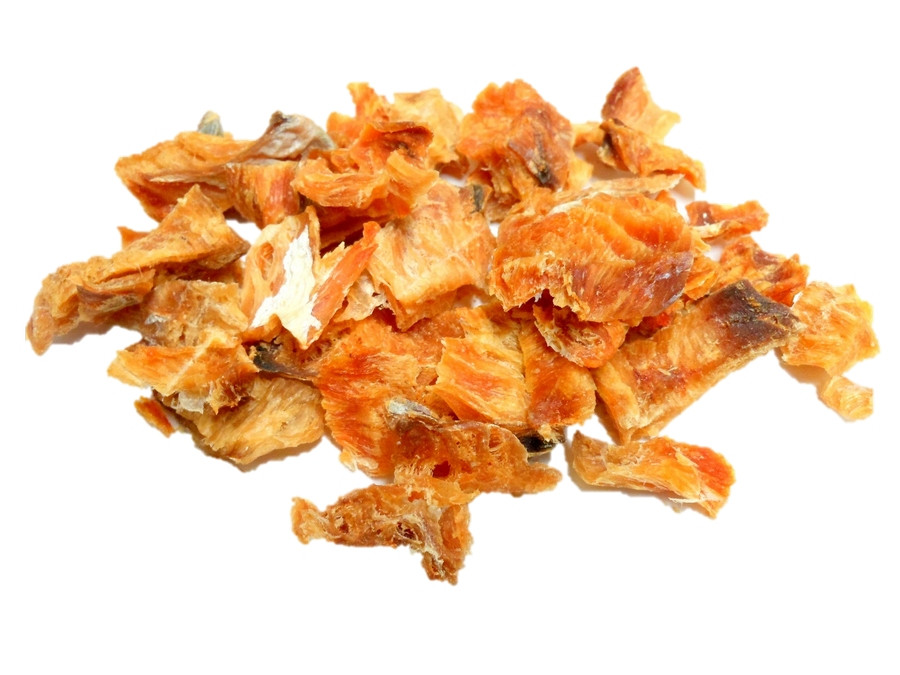
Fish Nibble is our small-format fish treat and, honestly, it is the one we point people to when nothing else has worked. Fish carries the strongest aroma of anything we make, and for a genuinely fussy cat, aroma is the door in.
The pieces are small, which means they portion easily and suit training without blowing the daily allowance. They are light and crisp rather than hard, so most cats manage them comfortably.
Fair warning: you will smell it when you open the bag. That is the entire point, and it is why it works.
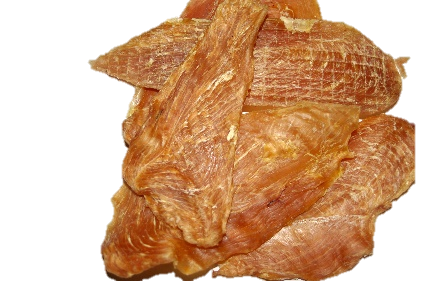
Chicken Chews, Chicken Breast
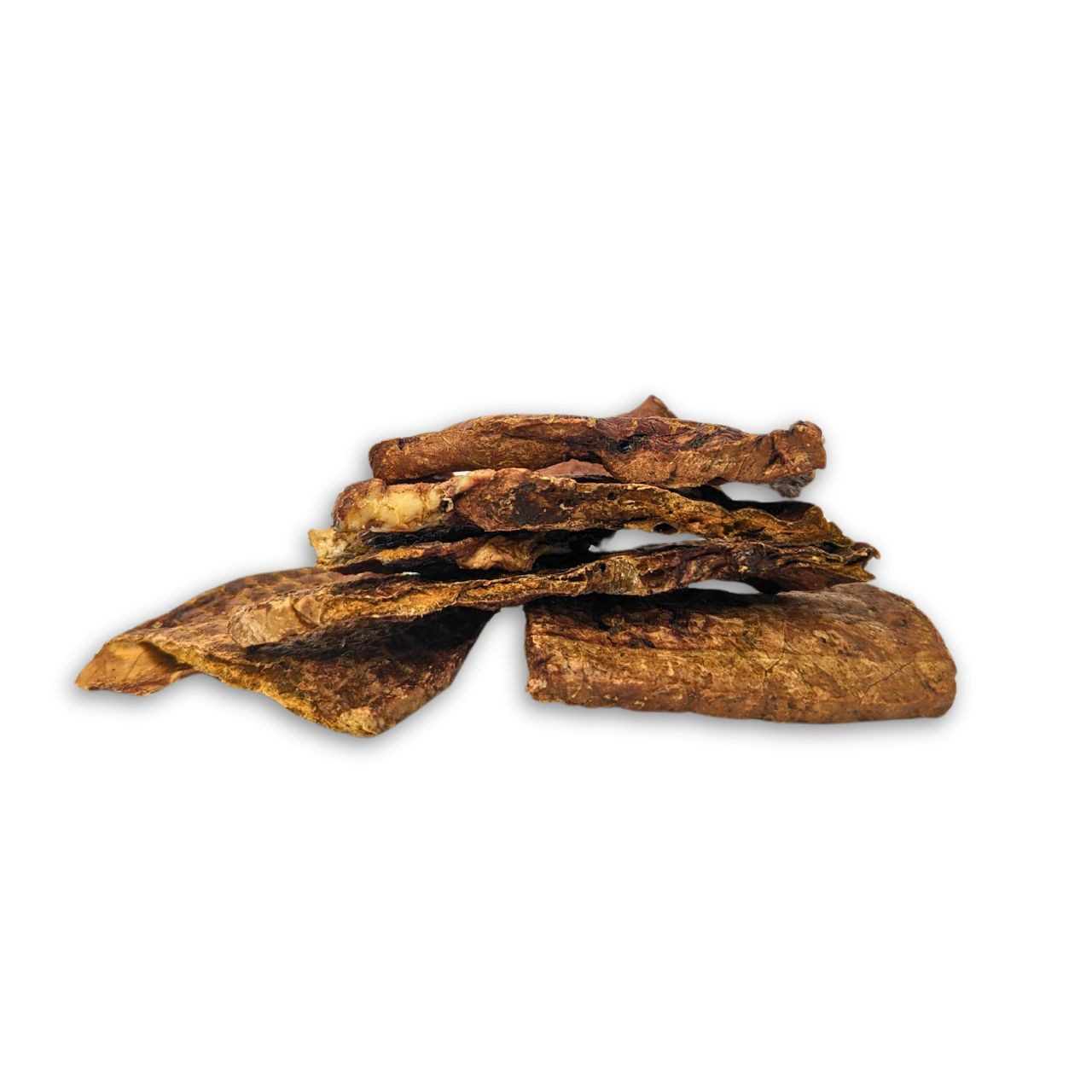
Chicken Chews are air dried Australian chicken breast, and nothing else. Chicken breast is lean, which makes this a sensible choice for cats who need to be careful about weight.
The texture is firm and fibrous, and this is the treat cats tend to actively work at. They will grip it, tear at it, and shake it around, which is closer to real feeding behaviour than swallowing a soft morsel whole. For a bored indoor cat, that few minutes of effort has value beyond the food itself.
For small cats, kittens or seniors, tear the strips into smaller pieces first.
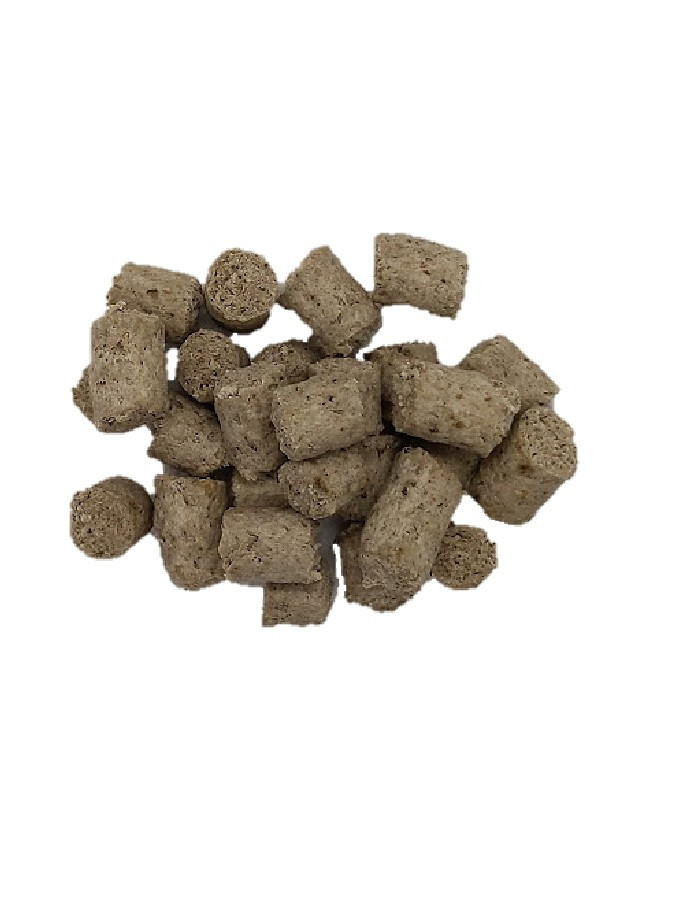
Lamb Puff, Lamb Lung
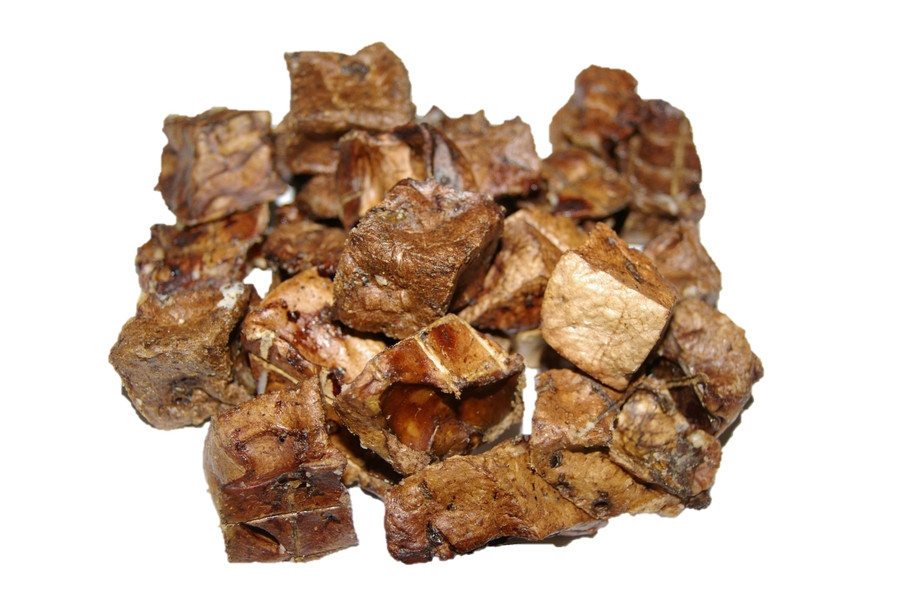
Lamb Puff is air dried Australian lamb lung, and it has a texture that no other treat quite replicates. It is extremely light and airy, almost like a savoury meringue, and it gives way immediately in the mouth.
That makes it our first suggestion for older cats, cats missing teeth, cats recovering from dental work, and any cat who has always rejected hard textures. It requires almost no chewing force.
Lamb is also useful as a novel protein if your cat has been eating chicken and fish their whole life and you are working through a sensitivity question with your vet.
Because it is so light, it does crumble. The dust at the bottom of the bag is not waste. Sprinkle it over a meal, particularly for a cat whose appetite needs a nudge.
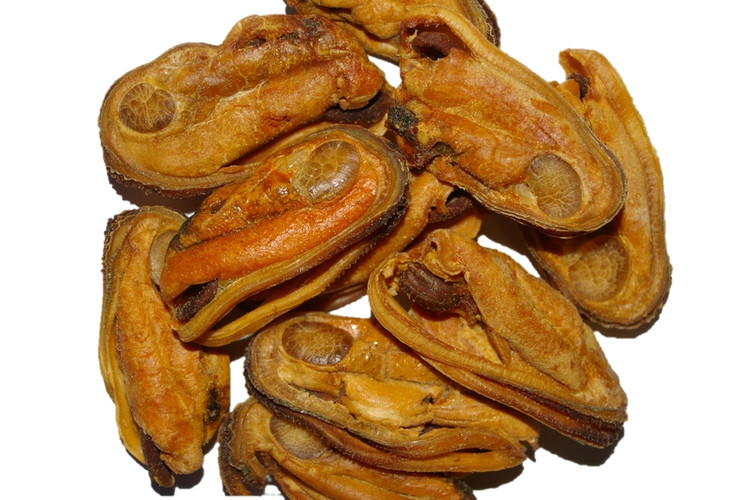
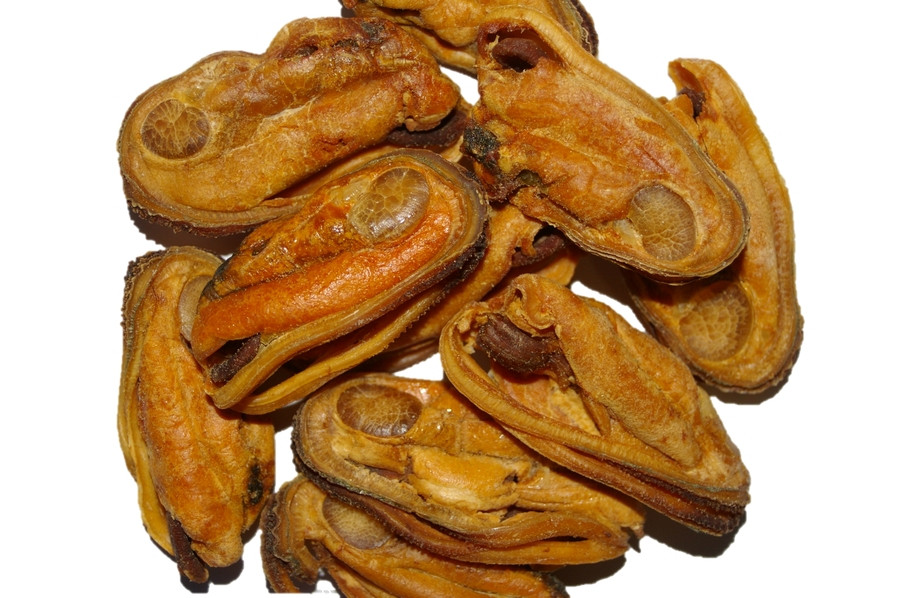
Green Lipped Mussels
Green Lipped Mussels are a whole dried shellfish treat, and they are a genuine novelty item for most cats. The aroma is distinctive and quite unlike a meat treat, which makes them excellent for rotation when a cat has grown bored.
They are firmer and chewier than our other cat treats, so they suit an adult cat with good teeth rather than a senior. Introduce them slowly, as with any new protein, and if your cat has a known seafood sensitivity, skip them and ask your vet.
We are not going to make health claims about them here. They are a single-ingredient shellfish treat that a lot of cats find very interesting, and that is the claim we will stand behind.
Little Fish Bites
Little Fish Bites sit on the dog side of our bakery, but plenty of cat owners buy them, so it is worth being upfront about. They are small whole dried fish, single ingredient, and cats respond very strongly to them.
What makes them useful for cats specifically is the whole-item format. A cat can pick one up, carry it, and take it somewhere to eat, which taps into something quite deep in feline behaviour. They are also excellent for loading into food puzzles and for scatter feeding.
Check the size of each piece and break larger ones down for a small cat.
Building a rotation
Our honest recommendation is not to buy one product. It is to keep two or three on hand and cycle them, so that no single treat becomes so familiar that your cat loses interest. A fish, a poultry and a red meat or seafood option covers most cats. The full range is at cat treats, and the wider cat section has everything else we make for them.
Dental Health and Cat Treats: An Honest Look
We are going to be more careful here than most pet brands are, because dental claims are where a lot of overselling happens.
Dental disease is extremely common in adult cats. Plaque builds up, mineralises into tartar, and gum inflammation follows. It is painful, it is progressive, and cats hide the pain remarkably well. Many owners only discover it when a vet looks in the mouth during an unrelated visit.
What a treat can realistically do
A firm, fibrous treat that a cat has to chew and tear at provides some mechanical action against the tooth surface. That is real, and it is better than nothing. Chewing also stimulates saliva, which helps rinse the mouth. Something like a firm air dried chicken breast strip requires genuine chewing rather than being swallowed whole, so it does more of this than a soft morsel does.
What a treat cannot do
A treat cannot remove existing tartar. Once plaque has mineralised onto the tooth, it needs professional scaling under general anaesthetic. No food product removes it.
A treat cannot reach below the gum line, which is where the damaging disease process actually occurs.
A treat cannot substitute for tooth brushing, which remains the most effective home dental care for cats, awkward though it is.
A treat cannot diagnose or treat existing dental pain. A cat with sore teeth may keep eating regardless, because cats are very good at concealing discomfort.
What we would actually suggest
Treat dental care as a stack. Regular veterinary dental checks sit at the bottom as the foundation. Home tooth brushing, if you can establish it, sits above that. Appropriate chewy textures sit above that again as a useful contributor, not a solution.
Signs that warrant a vet visit rather than a change of treat include bad breath, drooling, pawing at the mouth, dropping food, chewing on one side only, red or bleeding gums, or a sudden preference for soft food. Any of those, book an appointment with your Australian vet. Do not try to solve it with a dental treat.
And a specific caution: if your cat already has dental disease or missing teeth, hard treats may cause pain rather than help. That is exactly the situation where a very light texture like air dried lung is the kinder choice while the actual dental problem gets treated properly.
Using Treats for Bonding and Training Your Cat
Cats can absolutely be trained. The reason people believe otherwise is that they try to train cats the way they train dogs, and it does not transfer.
Dogs are cooperative pack animals with a strong drive to please. Cats are solitary hunters with no such drive. A cat will work for you when working for you is clearly worth it to the cat, and not otherwise. This is not a defect. It just means your reward has to be genuinely good and your timing has to be sharp.
The rules that make cat training work
Keep sessions very short. Two to three minutes. Cats disengage fast, and a session that ends while the cat is still keen is a session they will come back to. A session that runs until the cat wanders off teaches them that wandering off is an option.
Train slightly before a meal. A cat who has just eaten a full bowl has no reason to work. A cat who is mildly hungry is interested. Never train a genuinely hungry, distressed cat, but do use the natural pre-meal window.
Reward within about a second. The link between the behaviour and the reward has to be tight. If you are slow, the cat learns something other than what you intended.
Use tiny pieces. Ten repetitions need ten rewards. If each reward is a whole treat, you have blown the day's allowance on one session. Break everything down small.
Never punish. Cats do not learn well from punishment, and they do learn to associate the punishment with you. Reward what you want and manage the environment so the unwanted behaviour is harder to perform.
Consider a clicker or a marker word. A distinct sound made at the exact instant of the correct behaviour, followed reliably by a treat, gives you precision that hand delivery alone cannot. It takes a few short sessions to establish the association. It is worth it.
Things genuinely worth teaching a cat
- Coming when called. The single most useful cat behaviour. Pair a specific sound with a treat, consistently, until the sound alone brings them. This matters enormously if a cat ever slips outside.
- Going into the carrier voluntarily. Leave the carrier out permanently as furniture. Feed treats in it. Never let the carrier appear only on vet days, because a cat will draw that conclusion very quickly.
- Tolerating handling. Paws, ears, mouth, tail. Touch briefly, treat, stop. Build up over weeks. This makes nail trims, ear checks and vet exams dramatically less traumatic for everyone.
- Scale or scratching post use. Reward the cat for using the post rather than reprimanding them for using the couch.
- Target training. Teaching a cat to touch their nose to a target lets you move them around without picking them up, which is useful for a cat who dislikes being handled.
Treats as a bonding tool with a nervous cat
For a shy, rescued or newly adopted cat, treats do something no amount of coaxing can. They change what your presence predicts.
The technique is to do less than feels natural. Sit on the floor at a distance the cat is comfortable with. Do not look directly at them, because a direct stare reads as confrontational to a cat. Place a treat down, and leave it. Do not lean in. Do not reach.
Repeat daily, moving the treat marginally closer to yourself over days and weeks. Let the cat set the pace entirely. The goal is not to get the cat to eat from your hand this week. The goal is for the cat to conclude, on their own, that you are the reliable source of good things and no threat at all.
Slow blinks help too. Look softly at the cat and close your eyes slowly. Many cats will return it. It is a small thing that costs nothing.
Treats for Indoor Cats: Enrichment and Food Puzzles
Australian cat owners are increasingly keeping cats indoors or in enclosed catios, which is good for wildlife, good for cat safety and good for longevity. It does create a problem, though. An indoor cat has all its needs met and nothing to do, and a hunter with nothing to hunt gets bored.
Boredom in cats shows up as overgrooming, night-time yowling, attention-seeking behaviours, redirected aggression, and eating out of sheer lack of anything else to do.
Treats are one of the best tools you have here, because you can convert a passive calorie into an activity.
Scatter feeding
The simplest version and still one of the best. Instead of handing over the day's treats, throw them so they scatter across a room. Your cat now has to find them. It costs you nothing and turns thirty seconds of eating into several minutes of searching.
Vary where you scatter so it does not become a fixed routine.
Food puzzles
A food puzzle makes the cat manipulate an object to release food. Commercial versions exist, but you can make perfectly good ones.
- Cut two or three holes in a cardboard box and put treats inside, so the cat must fish them out with a paw.
- Use an empty egg carton with treats in some of the cups.
- Stand toilet roll tubes upright in a box, with treats down inside a few of them.
- Cut a small hole in a plastic bottle so treats fall out as it rolls.
Small firm treats work best because they need to move freely. Whole small dried fish and small fish pieces are ideal for this. Soft or crumbly treats jam.
Start easy. If a cat tries a puzzle twice and gets nothing, they will not try a third time. Make the first version almost too simple, then increase difficulty once they are confident.
Vertical and hidden feeding
Cats like height. Placing a treat on a cat tree platform, a windowsill or a shelf makes them climb for it, which is real physical exercise and taps into their preference for elevated vantage points.
Hiding treats in different spots around the house and letting the cat find them over the course of a day mimics the natural pattern of eating several small meals rather than one or two large ones.
Hunt then eat
The natural feline sequence is stalk, chase, catch, kill, eat, groom, sleep. Most indoor cats get the last part without the first part, which is unsatisfying for them.
Try running a wand toy session first, letting the cat actually catch the toy at the end, and then giving a treat immediately. Completing the sequence properly settles many cats far better than food alone. It is particularly effective in the evening for cats who wake the household at 4am.
Treats for Senior Cats
Cats are generally considered to be entering their senior years from around ten or eleven, though it varies a lot between individuals. What changes is worth understanding, because treats often need to change with it.
What changes with age
Smell declines. Since cats lead with their nose, a reduced sense of smell can look like fussiness or loss of appetite. It often is not either. Stronger smelling treats become genuinely more useful.
Teeth deteriorate. Dental disease is common in older cats, and hard treats may be uncomfortable or impossible. A cat who suddenly rejects a crunchy treat they used to love may be telling you their mouth hurts.
Digestion becomes less efficient. Older cats often absorb protein less efficiently than they used to, which is one reason many older cats lose muscle mass. Counterintuitively, many seniors need good quality protein just as much or more than younger adults, though specific health conditions can change that entirely.
Kidney disease becomes more common. This is very common in older cats, and it changes dietary requirements substantially. Cats with diagnosed kidney disease often need controlled phosphorus and specific protein management. High protein treats may not be appropriate. This is a firm "ask your vet" situation, and it is not one to guess at.
Arthritis affects mobility. An older cat may not be able to jump to reach a treat placed high up, or climb into a food puzzle. Adjust the difficulty down.
Adjusting treats for a senior cat
| Age-related change | What you might notice | Practical treat adjustment |
|---|---|---|
| Reduced sense of smell | Ignores treats they once liked, less interest in food generally | Switch to strongly aromatic options such as air dried fish. Warm slightly in your hand first to lift the scent. |
| Dental pain or missing teeth | Approaches the treat then walks away, chews on one side, drops food | Move to very light textures such as air dried lung. Book a vet dental check. |
| Reduced appetite | Eating less of the main meal | Crumble treats over the main food as a topper rather than giving them separately. Tell your vet about any appetite change. |
| Weight loss | Spine and hips more prominent, lighter on the scales | Do not simply add treats. Unexplained weight loss in an older cat needs veterinary investigation. |
| Reduced mobility | Stops jumping, hesitates before climbing | Bring enrichment down to floor level. Use flat puzzles instead of vertical ones. |
| Diagnosed kidney or heart disease | Vet has prescribed a therapeutic diet | Ask your vet specifically which treats are compatible. Do not assume single ingredient means safe for that condition. |
One general point on senior cats. A change in appetite, thirst, weight or treat preference in an older cat is information, and it is worth mentioning at a vet visit even if it seems minor. Cats compensate and conceal, so the small signals are often the only ones you get.

Using Treats for Medication and Vet Visits
Medicating a cat is famously difficult, and much of the difficulty is avoidable if you prepare before you need to.
Build the habit before you need it
The single best thing you can do is establish a "pill pocket" ritual while your cat is healthy. Give a soft treat or a small piece of something the cat loves at the same time each day, containing nothing at all. The cat learns to take it without inspection.
When medication day arrives, the medicated one goes into an established routine rather than being an obvious novelty. A cat asked to swallow something unfamiliar for the first time on the day they feel unwell is a much harder proposition.
Practical technique
- Give a plain one first, then the loaded one, then another plain one. Cats are more likely to swallow quickly when they expect more to follow.
- Keep the parcel small. A large treat with a tablet inside gets inspected. A small one gets swallowed.
- Do not linger. Hesitation and anxiety on your part telegraphs to the cat. Be brisk and normal.
- Watch for the spit. Cats are expert at eating around a pill or storing it in the cheek and depositing it later. Check the floor.
- Never crush without checking. Some medications must not be crushed or opened, and crushing can destroy a coating that protects the stomach or controls the release rate. Always ask your Australian vet or pharmacist before altering any tablet.
- Do not hide medication in the main meal. If the cat detects it, they may develop an aversion to their staple food, which creates a much bigger problem than the one you were solving.
Treats and the vet visit itself
Vet anxiety in cats is usually built long before the clinic. It is built by the carrier appearing, being bundled into it, the car, and the smell of the clinic.
Work backwards through that chain with treats.
The carrier. Leave it out all the time, door open, with a familiar blanket inside. Drop treats in it when the cat is not looking, so the carrier randomly contains good things. Never use it as punishment or a time-out space.
The car. Do a few trips that go nowhere. Carrier into car, engine on, treat, engine off, back inside. Then a two minute drive around the block. Build up.
The clinic. Many Australian clinics are happy for you to drop in for a "social visit" with no examination, where the cat gets a treat on the reception counter and goes home. Ring and ask. It costs a few minutes and can change the relationship for years.
On the day. Bring the cat's favourite treat with you. Many cats will not eat at all in a clinic due to stress, and that is completely normal, so do not force it. But if they will take something, the treat gives the vet a way to make the visit less negative.
A note of realism: some cats will never be relaxed at the vet, and no amount of treats fixes it. In those cases talk to your vet about pre-visit calming options. That is a legitimate medical conversation, not an admission of failure.
Introducing a New Treat to a Suspicious Cat
Given everything above about neophobia, you should expect a new treat to be rejected on the first offer. That rejection is not a verdict. It is the opening position.
A staged introduction that actually works
- Let them smell it with no pressure. Put a piece down near the cat and walk away. Do not hover, do not watch, do not encourage. Many cats will not engage with new food while being observed.
- Try again with the treat crumbled onto familiar food. Just a dusting, mixed in. This gets the taste and smell into a context the cat already trusts.
- Increase the proportion gradually. Over several days, use slightly larger crumbs and less mixing, so the cat encounters recognisable pieces.
- Offer it separately again, near a meal time. Now that the flavour is familiar, offering it on its own has a much better chance.
- Try it during play. A cat in a hunting frame of mind is much more willing to grab something and eat it than a cat sitting still. Throw a piece so it skitters across the floor.
- Warm it slightly. Holding a piece in your hand for thirty seconds, or letting it sit briefly somewhere warm, lifts the aroma noticeably. Never microwave a dried treat.
How long to persist
Give a new treat several separate attempts across a week or two before concluding your cat does not like it. Repeated low-pressure exposure is generally what shifts acceptance in a neophobic animal, and a single offer proves very little.
That said, know when to stop. If a cat has clearly and consistently refused something across many attempts, accept it. There is no prize for winning this argument, and pushing food at a reluctant cat can build a negative association you did not want.
Introducing safely
Whatever the treat, start with a small amount. New proteins can upset a sensitive digestive system, and it is far better to discover that with one small piece than with a handful. Watch for vomiting, loose stools or itching over the following day or two, and if you see any of it, stop and speak to your Australian vet.
If your cat is already on a veterinary prescribed diet or being investigated for a food intolerance, do not introduce anything new without checking first. A single unauthorised treat can invalidate weeks of an elimination trial.
Hydration: Why Cats Under-Drink, and Where Treats Fit
The domestic cat descends from a desert animal, and it shows. Cats evolved to get most of their water from the bodies of the prey they ate, which is roughly seventy percent water. Their thirst drive is correspondingly weak compared to a dog's.
In a modern home, particularly one where the cat eats mainly dry food, that weak thirst drive becomes a problem. A cat on dry food alone frequently does not drink enough to make up the deficit, and chronic mild dehydration is associated with urinary tract and kidney issues, which are common in cats.
What this means for dried treats
Let us be straightforward, because this is a place where a treat brand could easily be dishonest. Air dried treats are, by definition, low in moisture. They do not hydrate your cat. They are a dry food.
That is fine in the quantities we are talking about, because treats should only ever be a small fraction of intake. But it does mean dried treats are not the answer to a hydration problem, and anyone who tells you otherwise is selling something.
Things that actually help a cat drink more
- Wet food. By far the most effective lever. Incorporating wet food into the diet raises total water intake substantially. Discuss the right balance with your vet.
- More water bowls, in more places. Cats often will not walk across the house for a drink. Put bowls in several rooms.
- Move the water away from the food. Many cats instinctively avoid drinking right next to where they eat. Separating the bowls often increases drinking immediately.
- Use wide, shallow bowls. Cats dislike their whiskers touching the sides of a narrow bowl. Ceramic or stainless steel over plastic.
- Try running water. Many cats strongly prefer moving water and will use a pet fountain far more than a still bowl.
- Refresh daily. Cats are fussy about stale water. It takes ten seconds.
- Add water to food. A splash of warm water stirred through wet food increases intake and lifts the aroma at the same time.
- Crumble a dried treat into water or broth. A small amount of a strong smelling treat crumbled into plain water can make it more interesting. Never use commercial stock or gravy, because most contain onion or garlic, which are toxic to cats.
If your cat's drinking suddenly increases or decreases noticeably, that is worth a vet visit. A marked increase in thirst in a cat can be an early sign of several conditions that respond much better to early treatment.
How to Store Cat Treats So They Keep Their Aroma
This section is short but it is one of the most practically useful in the whole guide, because poor storage is behind a large share of "my cat suddenly went off their treats" cases.
Aroma is volatile. The molecules that make a dried fish smell like a dried fish escape into the air, which is exactly how your cat detects them. Every hour a bag sits open, some of that aroma leaves and does not come back. Air, warmth, light and humidity all speed it up.
Storage rules
- Reseal immediately, every time. Not after you have given the treat and had a chat with the cat. Immediately. Press the air out of the bag before sealing.
- Use an airtight container. Once a bag is opened, decant into a proper airtight container, or clip the bag and put the whole thing inside one. Glass or good quality food-grade plastic.
- Keep it cool, dark and dry. A pantry or cupboard, not a windowsill and not on top of the fridge, which is warmer than you think. Australian summers are hard on dried products, particularly in the north.
- Keep the original packaging or note the batch and best before. If you decant, keep the label information. You want it if you ever need to raise a question about a batch.
- Use a small working container. Keep a week's worth in a small tin near where you actually use it, and leave the bulk of the bag sealed and undisturbed. This is the single best trick for keeping the last third of a bag as good as the first third.
- Do not refrigerate dried treats routinely. Fridges are humid, and moving a product in and out causes condensation, which is how mould starts. A cool dry cupboard is better. Exceptions apply to any product where the packaging specifically says to refrigerate after opening, so follow the pack.
- Never decant into a container that had something else strongly scented in it. Cats notice. A container that once held a citrus-scented product will make the treats smell wrong.
Signs a treat has gone off
Throw out any dried treat that is soft when it should be crisp, that has visible mould, that smells rancid or sour rather than meaty, or that has been sitting open past its best before date. Fats in dried meat can go rancid, and rancid fat smells unpleasantly sharp and stale. If you are unsure, bin it. It is not worth the risk of an upset cat.
When Your Cat Suddenly Refuses a Treat They Used to Love
This happens to almost every cat owner eventually, and it is genuinely unsettling. Yesterday your cat came running. Today they sniff it and walk away.
Work through the possibilities in order, starting with the boring ones.
| Possible cause | Clue that points to it | What to do |
|---|---|---|
| The treat has lost its aroma | Bag has been open for a while, or stored somewhere warm | Smell it yourself against a fresh bag. If it is faint, replace it and fix your storage. |
| New batch smells slightly different | Refusal started exactly when you opened a new bag | Natural products vary batch to batch. Try mixing old and new, or reintroduce gradually. |
| Simple boredom | The treat has been given daily for a long stretch, cat is otherwise fine | Rest it for two to three weeks and rotate something else in. It often comes back. |
| The cat is not hungry | Refusal happens after meals, acceptance before them | Shift treat time to before a meal. Check nobody else is feeding the cat. |
| Something in the environment changed | New bowl, new location, moved furniture, new pet, visitors, building noise | Return to the previous setup and reintroduce changes slowly. |
| A negative association formed | The treat was used to hide medication, or given just before something unpleasant | Switch to a completely different treat for medication and let the old one recover its reputation. |
| Container or hand smells wrong | New storage jar, new hand soap, cleaning product residue | Wash hands with unscented soap. Re-wash and air the container. |
| Dental pain | Approaches keenly then backs off, drops it, chews oddly, bad breath, drooling | Vet appointment. Do not try to solve with a different treat. |
| Nausea or gastrointestinal upset | Also off main food, vomiting, lip licking, hiding | Vet appointment. |
| General illness | Refusing everything, lethargy, weight change, hiding, changed toilet habits | Vet appointment promptly. Do not wait. |
The line that matters
Refusing one treat while eating normally otherwise is a preference problem. It is annoying but not urgent.
Refusing food generally is a medical problem, and in cats it is genuinely time sensitive. A cat that stops eating, particularly an overweight cat, can develop hepatic lipidosis, a serious liver condition, within a matter of days. Do not adopt a wait-and-see approach with a cat that has stopped eating. Ring your Australian vet.
Foods You Must Never Feed Your Cat
Cats are smaller than dogs, and their livers process certain compounds far less effectively, which means a quantity that would merely upset a dog can seriously harm a cat. Some of the items below are also things people genuinely do not expect.
| Food or substance | Why it is dangerous to cats | Where it hides |
|---|---|---|
| Onion, garlic, leek, shallot, chives | Compounds in the allium family damage cats' red blood cells and can cause anaemia. Cats are more sensitive to this than dogs. Cooked, raw, dried and powdered forms are all a problem. | Stock cubes, gravy, casserole leftovers, baby food, onion and garlic powder, many human sauces |
| Chocolate | Contains theobromine and caffeine, which cats cannot clear efficiently. Affects the heart and nervous system. Darker chocolate and cocoa powder are worse. | Baking chocolate, cocoa powder, desserts, cocoa mulch in the garden |
| Caffeine | Same class of compound as chocolate. Causes agitation, rapid heart rate and tremors. | Coffee, tea, used coffee grounds in the bin, energy drinks, some tablets |
| Alcohol | Cats are very small and extremely sensitive. Even small amounts can be dangerous. | Unattended drinks, rum-soaked desserts, raw fermenting dough |
| Raw bread dough | Two hazards at once. The dough expands in the warm stomach, and yeast fermentation produces alcohol internally. | Dough left on the bench to prove |
| Xylitol (also sold as birch sugar) | A sugar substitute with well documented severe toxicity in dogs. Best avoided entirely for cats. Keep it away from all pets. | Sugar-free gum and mints, some peanut butters, sugar-free baking, some toothpastes |
| Grapes, sultanas, raisins, currants | Associated with acute kidney injury in dogs. The picture in cats is less well documented, so the sensible position is complete avoidance. | Fruit bowls, muesli, fruit cake, hot cross buns, scones |
| Lilies (all true lilies and daylilies) | Extremely toxic to cats and one of the most serious household dangers there is. Every part is dangerous, including the pollen and the vase water. Ingestion can cause acute kidney failure. | Cut flower bouquets, garden beds, pollen brushed onto fur then groomed off |
| Dog food and dog treats as a staple | Dog food is not formulated for cats and does not supply enough taurine, arachidonic acid or preformed vitamin A. Long term feeding risks serious heart and eye disease. | Multi-pet households where the cat raids the dog's bowl |
| Cooked bones | Cooking makes bone brittle so it splinters. Risk of choking, mouth injury and internal perforation. | Roast dinner scraps, chicken carcasses, bin raiding |
| Raw fish fed regularly | Some raw fish contains an enzyme that destroys thiamine, and long term feeding risks thiamine deficiency, which is a neurological problem. Also a parasite and bacterial risk. | Fresh catch, fish scraps, unprocessed raw fish diets |
| Human tuna as a regular food | Not balanced for cats, and heavy reliance risks nutritional imbalance. Many cats become addicted to it and refuse proper food. | Tinned tuna in brine or oil intended for people |
| Liver in large or frequent amounts | Very rich in preformed vitamin A, and excessive intake over time can cause vitamin A toxicity affecting the bones and joints. | Home-prepared diets, liver treats given too generously |
| Milk and dairy | Not toxic, but most adult cats are lactose intolerant, so it commonly causes diarrhoea and stomach upset. The saucer of milk image is a myth worth retiring. | Cow's milk, cream, cheese, ice cream |
| Macadamias and most nuts | Macadamias are documented as toxic to dogs. Nuts generally are high in fat and a choking hazard, so avoid. | Snack bowls, baking, trail mix |
| Avocado | Contains persin. Risk to cats appears low, but the flesh is very fatty and the stone is a serious obstruction hazard. | Guacamole, salad scraps, stones in the compost |
| Green potato, potato leaves, tomato leaves and stems | The green parts of these plants contain solanine, which is toxic. | Vegetable gardens, peelings, green sprouting potatoes |
| Raw egg white in quantity | Contains avidin, which binds biotin, and there is a salmonella risk. | Home-prepared raw diets, baking bowls left out |
| Human medication of any kind | Paracetamol in particular is severely toxic to cats even at small doses. Many common human medicines are dangerous. Never medicate a cat with anything not prescribed for that cat. | Bedside tables, handbags, dropped tablets, well-meaning home treatment |
| Essential oils and diffusers | Cats process many essential oil compounds poorly. Tea tree oil in particular is dangerous. Oils can also settle on fur and be swallowed during grooming. | Reed diffusers, ultrasonic diffusers, undiluted oils, some natural cleaning products |
| Very salty or heavily seasoned human food | Cats are small, so salt loads that are trivial for us are not for them. Seasoning frequently contains onion or garlic. | Chips, deli meats, takeaway, roast leftovers |
If you think your cat has eaten something dangerous
Do not wait to see what happens, and do not try to make your cat vomit at home. Inducing vomiting in cats without veterinary guidance can cause serious harm.
Ring your Australian vet or your nearest after-hours emergency clinic straight away. Tell them what was eaten, roughly how much, and when. Take the packaging or a photo of the plant with you if you can, because identifying the exact substance changes the treatment.
Cats often show no symptoms in the early stages of poisoning, particularly with lilies and with paracetamol. Absence of symptoms is not reassurance. Early treatment makes an enormous difference in outcomes, and a phone call costs nothing.
Putting It All Together: A Simple Treat Routine
If you take nothing else from this guide, take this.
Choose fewer, better treats. Two or three single-ingredient Australian meat or seafood options, rotated, will serve your cat better than a cupboard full of formulated novelties.
Measure the day's allowance in the morning. Small container, done when it is empty. This alone prevents most treat-related weight gain.
Make them work for at least some of it. Scatter feed, use a puzzle, put a piece somewhere they have to climb. Same calories, more cat.
Save the best one for the hard moments. Carrier training, nail trims, medication, vet visits. A high-value treat kept rare stays high-value.
Store them properly. Airtight, cool, dark, resealed straight away. Aroma is the whole game with cats.
Expect refusal, and be patient about it. Neophobia is normal. Repeated low-pressure exposure works better than persuasion.
Know where the line is. Fussiness about one treat is a preference problem. Refusing food generally, losing weight, drooling, hiding or a change in drinking is a medical problem, and it belongs with your Australian vet rather than with a change of snack.
Cats are not small dogs, and treating them like small dogs is where most of the frustration comes from. They are hunters with sharp noses, strong opinions, small stomachs and a genuine biological need for animal protein. Work with that rather than against it, and treats become one of the better tools you have for keeping a cat healthy, engaged and comfortable with you.
Everything in our cat treat range is made here on the Sunshine Coast from single Australian proteins, air dried, with nothing artificial added, because after making treats since 2012 we have not found a good reason to complicate it.
Our cat treats are single Australian ingredients, air dried, with nothing artificial added. That is the whole recipe.
Shop the cat treat rangeCat Treat FAQs
Quick answers to the questions Australian cat owners ask most. This is general guidance only, and your own vet always has the final word for your cat.
How many treats can I give my cat each day?
The most common rule of thumb, published by the North American veterinary network VCA Animal Hospitals, is that treats should make up no more than 10 per cent of your cat's daily calories, with the other 90 per cent coming from a complete and balanced cat food. For most adult cats that means a few tiny pieces a day. If your cat is overweight or on a special diet, ask your Australian vet to set the number for you.
Can cats eat dog treats?
A small piece of a simple, single ingredient meat treat from the dog range, such as plain lamb liver or lamb lung, is generally fine as an occasional share in a multi pet home. What cats must never live on is dog food. RSPCA Australia warns that dog food is deficient in taurine, an essential nutrient cats can only obtain through their food, so a cat's actual diet always needs to be a complete and balanced cat food.
Do cat treats help with hairballs?
Treats are not a hairball fix, and we would rather tell you that straight. Cornell University's Feline Health Center in the United States explains that hairballs are a by product of normal grooming, that bringing one up every week or two is usually no cause for concern, and that regular brushing is the main way to reduce them. See your vet promptly if your cat is repeatedly retching without producing anything, or goes off food and seems lethargic.
Do crunchy treats clean my cat's teeth?
Only partly. RSPCA Australia notes that around 70 per cent of cats have some level of dental disease by three years of age, and that while dental chews can help reduce the formation of plaque and tartar, they will not prevent it. Daily tooth brushing is the most effective home care, and your cat should have a dental check as part of an annual vet visit. Enjoy crunchy treats as treats, not as a toothbrush.
My cat turns her nose up at every treat. What should I try?
Start with texture rather than flavour, because that is usually where fussy cats draw the line. Offer one light, airy treat such as a lamb puff and one firmer treat such as a fish nibble, at room temperature so the aroma comes through, and leave a piece near a meal without any fuss. Many cats need several quiet introductions before they commit. If your cat suddenly refuses all food, not just treats, that is a vet visit, not fussiness.
What should I do if my cat eats chocolate or another toxic food?
Act straight away rather than waiting for symptoms. Contact your vet immediately, or call the Australian Animal Poisons Helpline on 1300 869 738, a 24/7 service recommended by the RSPCA that provides rapid first aid advice, risk assessment and triage for pet owners. Have the packaging handy if you can, so you can say exactly what was eaten and roughly how much.
Huds and Toke: Proudly Australian, Family Owned
We have been baking and drying pet treats in our own HACCP-certified kitchen on Queensland's Sunshine Coast since 2012. Everything is made here, using Australian ingredients, with no added sugar and no artificial colours or preservatives.
Cite this article: The Huds and Toke Editorial Team (2026). Cat Treats Australia: The Complete Owner's Guide Huds and Toke, published 21 July 2026. https://hudsandtoke.com.au/cat-treats-australia-guide/
References
- RSPCA Australia Knowledgebase. What should I feed my cat? https://kb.rspca.org.au/knowledge-base/what-should-i-feed-my-cat/
- Vetwest Veterinary Clinics. Feeding your cat. https://www.vetwest.com.au/pet-library/feeding-your-cat/
- RSPCA Australia Knowledgebase. What are common household dangers for pets? https://kb.rspca.org.au/categories/companion-animals/household-and-garden-dangers/what-are-common-household-dangers-for-pets
- Animal Medicines Australia. Pets in Australia survey (media release). https://animalmedicinesaustralia.org.au/news-and-media/australias-most-comprehensive-pet-survey-shows-nearly-three-quarters-of-australian-homes-now-have-a-pet/
- VCA Animal Hospitals (United States). Feeding Canine Picky Eaters. https://vcahospitals.com/know-your-pet/feeding-canine-picky-eaters